哲学する住宅 / Philosophizing House
コンセプトモデル Conceptual model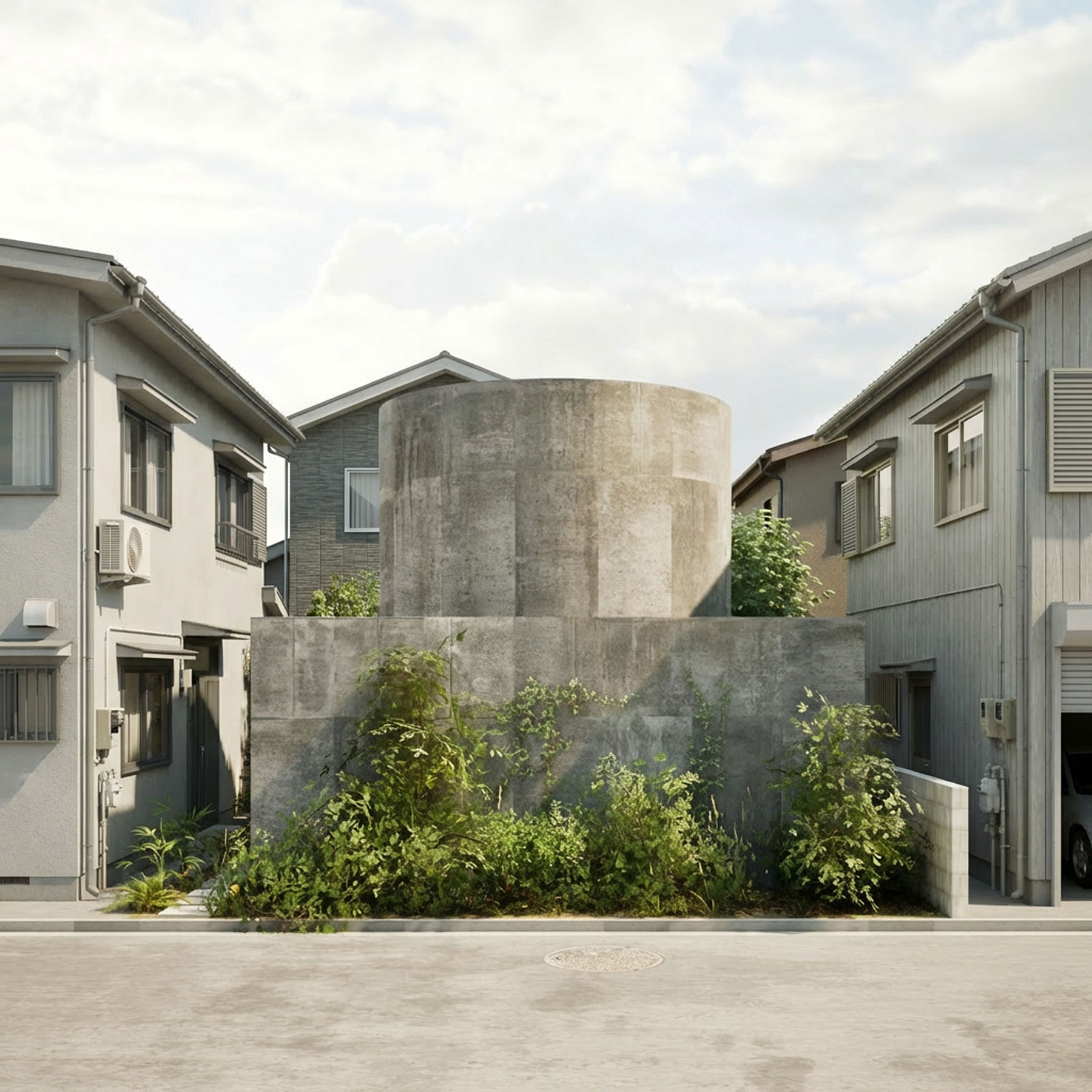
哲学する住宅
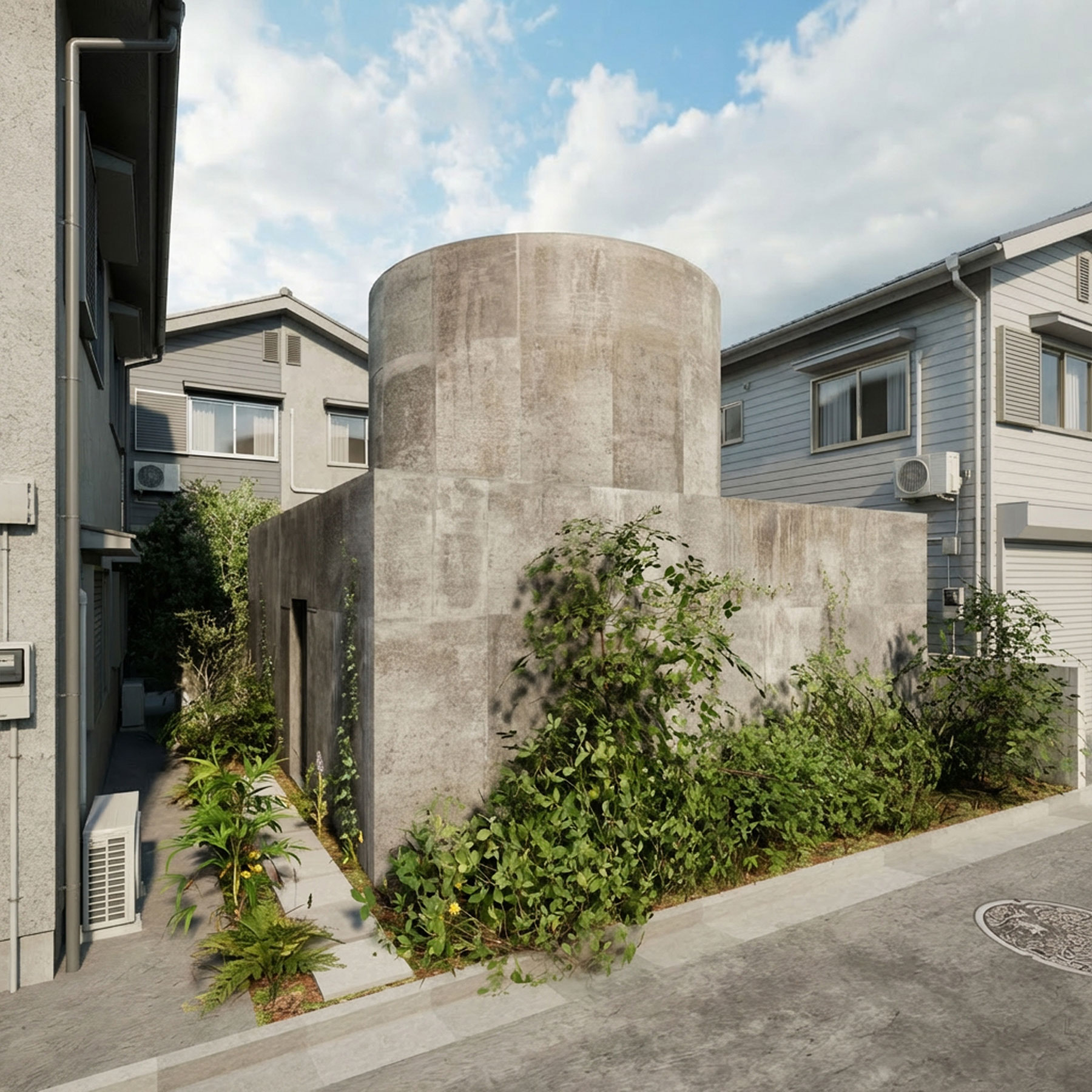
ひとりの哲学者が住む、コンクリート造平屋住宅のコンセプトモデルである。
窓のない単純な立体で構成された外観は、一般的な住宅のデザイン文法から意図的に距離を置いた。光はすべて天窓から採り入れる計画とした。
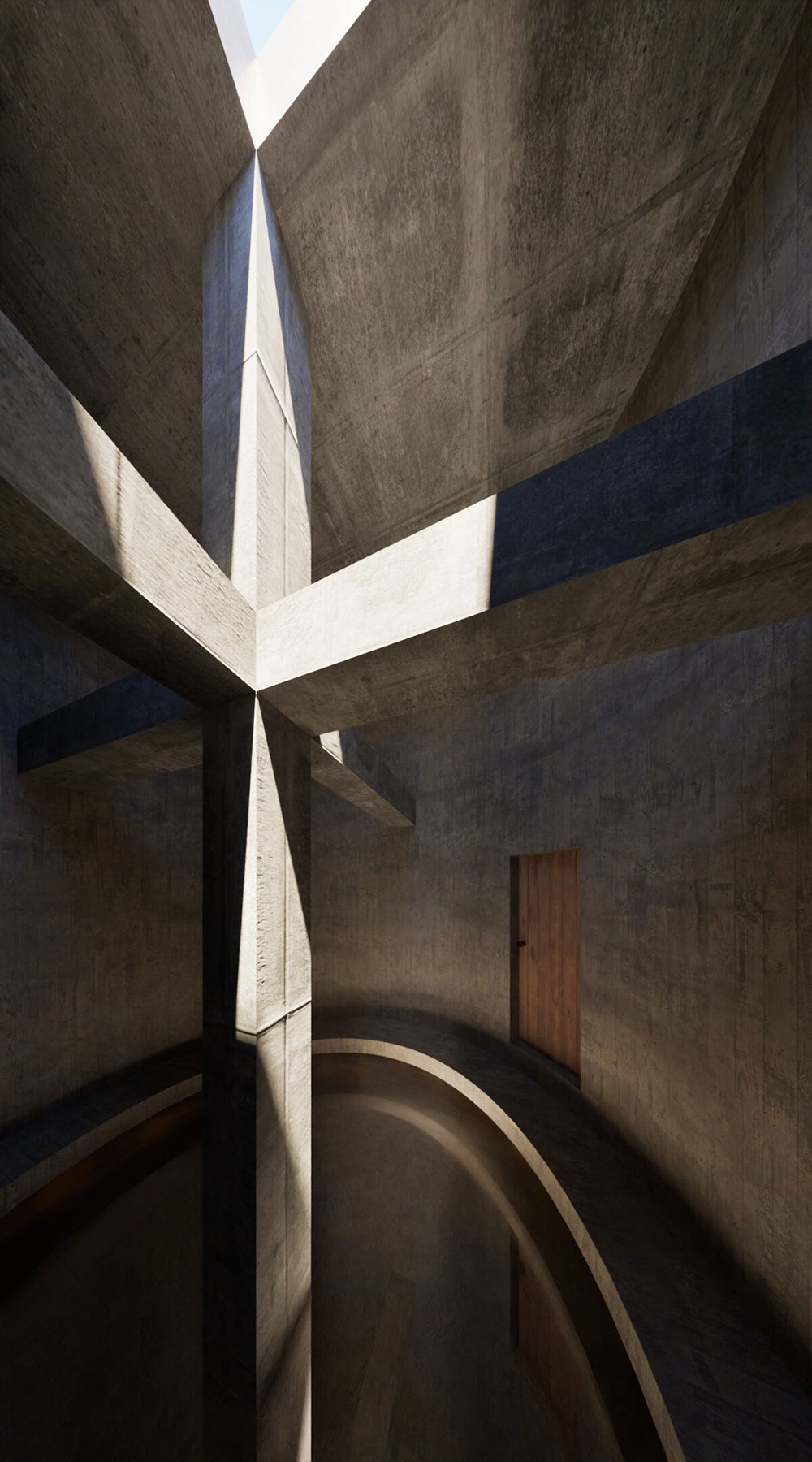
建物は6m×6mの矩形に収め、中央には可能な限り大きな空っぽの空間を確保、それを囲むように、必要最小限の生活機能を配置し、その1/4を書庫とした。中央空間の天井高は4,800mm、周囲の空間は2,100mm。この、質素で禁欲的な生活空間と、それに対して不釣り合いなほど広い余白との対比が、本建築の思想を現している。
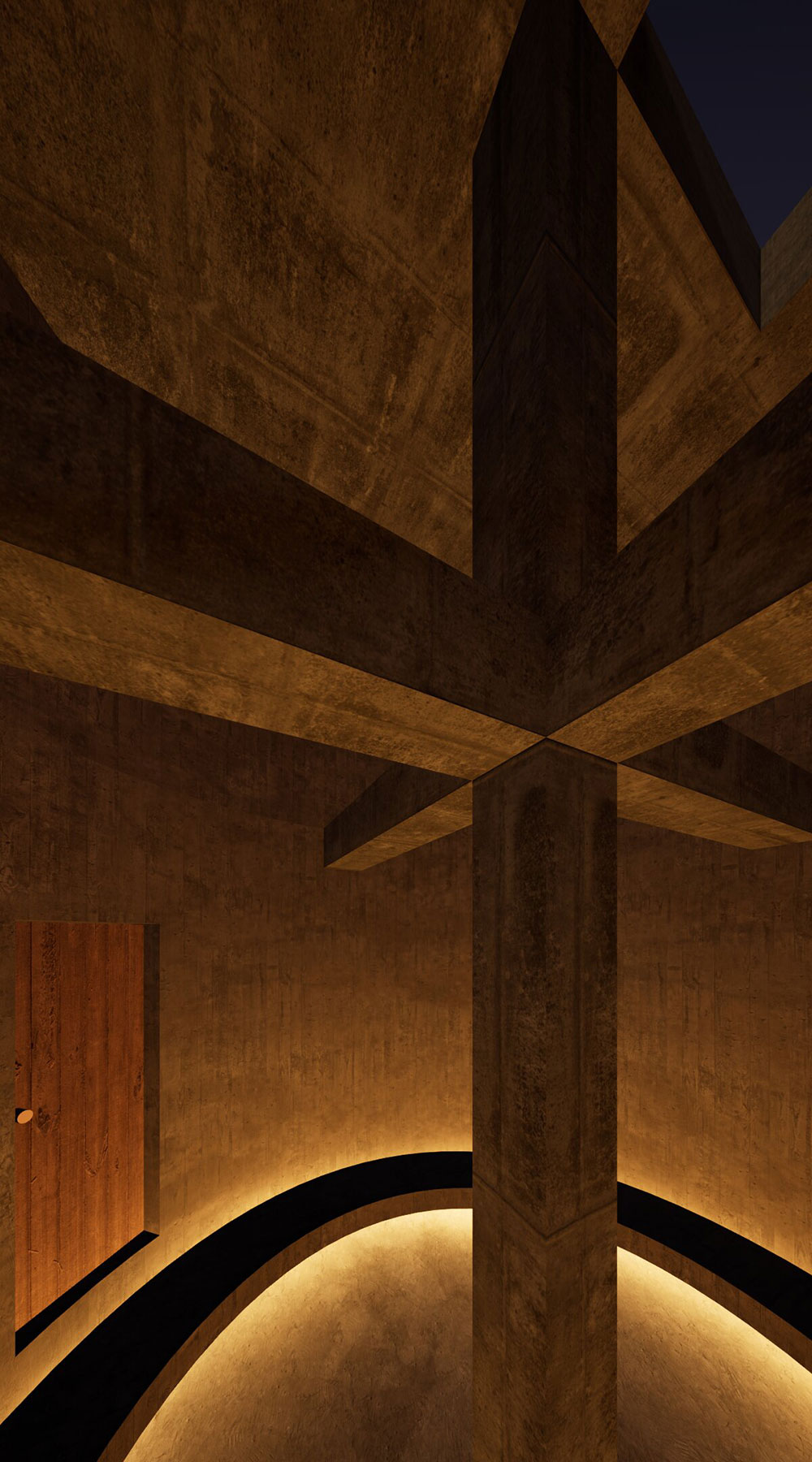
名前を持たない中央の空間は、内省的な思惟の場である。天窓にはガラスは嵌っていない。シャッターを閉めなければ雨や風が入り込み、ときには雪も舞い込むだろう。床は一時的に水を張ることができ、水面は光を映し、水音は空間に変化をもたらす。
中心に静かに立つ柱と梁は、ここが日常に飲み込まれ、ありふれた生活の場になることを拒絶している。非日常的な「奥」であるこの空間が、日常の通路になってしまわないよう、これを取り囲む諸室間には直接行き来できるスキマを設けた。
ここは「何かを考える場所」であり、同時に「何も考えない場所」でもある。
選択肢が過多な現代において、我々は不要なモノや情報に埋もれ、身動きが取れなくなっている。人がその人らしく生きるためには、何が本当に必要で、何が不要なのかを再考する必要がある。それは住宅の在り方においても同様である。
本計画では、「らしさ」や「正しさ」、「利便性」よりも、思想を建築として具現化することを重視し、余計な要素を削ぎ落とした、素の建築の提案を目指した。
この住宅は「哲学者のための住宅」でも「哲学するための住宅」でもなく、「哲学する住宅」である。
Philosophizing House
This is a conceptual model of a single-story concrete residence designed for a philosopher. The exterior, a windowless and pure geometric form, intentionally distances itself from the conventional grammar of residential design. All natural light is drawn exclusively through the skylight.
The structure is contained within a 6m×6m square. At its heart lies as large an "empty" void as possible within the small footprint, surrounded by a perimeter of essential living functions, a quarter of which is dedicated to a library. The ceiling of the central space reaches a height of 4,800mm, while the surrounding functional areas are kept to a modest 2,100mm. This stark contrast—between the austere, ascetic living quarters and the disproportionately large void—embodies the core philosophy of this architecture.
This nameless central space serves as a site for introspective contemplation. The skylight is unglazed; unless the shutter is closed, rain, wind, and occasionally snow will find their way inside. The floor can be temporarily flooded to create a shallow pool of water, where the surface reflects the shifting light and the sound of ripples transforms the atmosphere.
The pillar and beam standing quietly at the center refuse to let this space be swallowed by the mundane or settle into the comfort of an ordinary home. To prevent this "inner sanctum"—a space of the extraordinary—from being reduced to a mere corridor for daily life, small gaps were created between the surrounding rooms, allowing for direct movement between them.
It is a place for "thinking of something," and simultaneously, a place for "thinking of nothing."
In an age of excessive choice, we find ourselves buried and paralyzed by unnecessary objects and information. To live authentically, we must reconsider what is truly essential. Architecture is no exception. Rather than prioritizing "conventions," "correctness," or "convenience," this project focuses on the manifestation of thought through form. It is a proposal for "bare architecture," stripped of all excess.
This is not a "house for a philosopher," nor a "house for philosophizing." It is a "Philosophizing House."